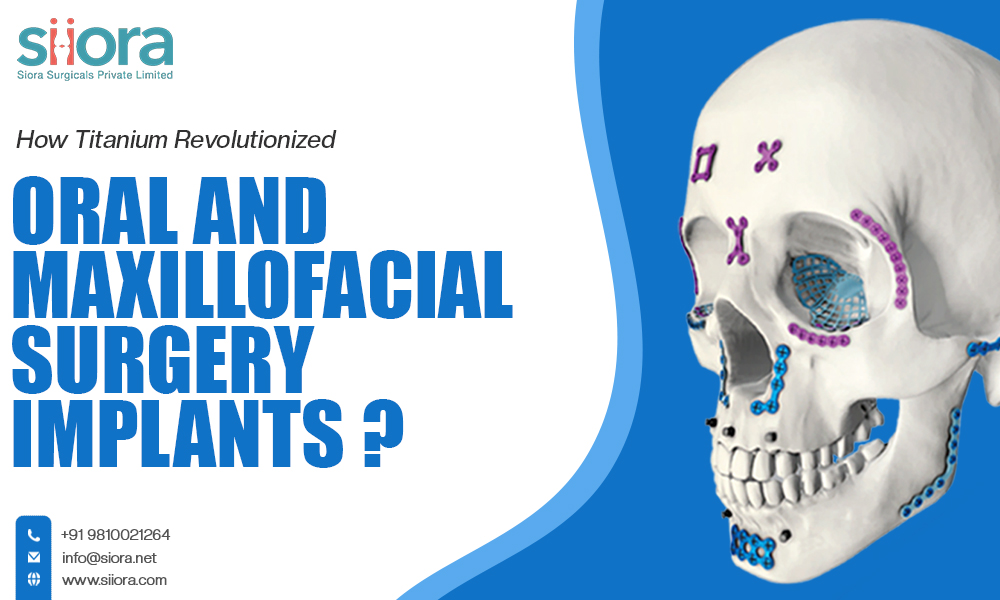
If you talk to maxillofacial surgeons who have been practicing for a couple of decades, many will tell you the same thing: titanium changed everything. Not overnight, and not because it was trendy, but because it quietly solved problems surgeons had been working around for years.
Before titanium became the standard, maxillofacial implant materials were often a compromise. Some were strong but poorly tolerated by the body. Others were biocompatible but lacked long-term stability. Titanium managed to strike a balance that felt almost too good to be true—and that balance is why it now sits at the center of oral and maxillofacial surgery.
A Material That Works With the Body, Not Against It
One of the biggest reasons titanium gained acceptance is how well the human body tolerates it. Unlike many metals, titanium doesn’t provoke a strong immune reaction. Once placed, it tends to stay quiet. No inflammation. No rejection signals. Just stability.
This property is especially important in the facial region, where bone quality varies and soft tissues are delicate. Whether it’s a mandibular fracture, midface reconstruction, or dental implant support, surgeons need materials that integrate smoothly without causing complications down the line.
Strength Without Unnecessary Bulk
Facial bones don’t allow room for oversized hardware. Plates and screws need to be slim yet reliable. Titanium delivers strength without forcing surgeons to use bulky implants. That matters not only for surgical ease but also for patient comfort.
Thinner titanium plates reduce palpability under the skin and lower the risk of soft-tissue irritation. In visible areas like the jawline or orbital rim, this makes a noticeable difference in patient satisfaction after healing.
Predictable Healing and Osseointegration
One of titanium’s standout features is its ability to bond with bone through osseointegration. Instead of sitting passively, titanium forms a stable interface with surrounding bone over time. This predictability gives surgeons confidence, especially in load-bearing areas.
In trauma cases or reconstructive surgery, predictable healing is invaluable. Surgeons can plan fixation knowing the implant will support bone healing rather than interfere with it.
Adaptability in the Operating Room
Titanium isn’t just strong and biocompatible—it’s also workable. Plates can be contoured without losing integrity. Screws maintain purchase even in challenging bone conditions. For surgeons dealing with irregular fractures or complex anatomy, this adaptability simplifies decision-making.
That flexibility also reduces operative time. Less struggle with implant fit means smoother procedures and fewer adjustments during surgery.
Long-Term Reliability Matters
Maxillofacial implants aren’t temporary solutions. They’re often expected to last a lifetime. Titanium’s corrosion resistance makes it ideal for long-term implantation, even in the moist and dynamic environment of the oral cavity.
Over the years, this reliability has translated into fewer revision surgeries and fewer implant-related complications—benefits that matter to both surgeons and patients.
From Trauma to Reconstruction
Today, titanium is used across nearly every area of oral and maxillofacial surgery. Trauma fixation, orthognathic procedures, tumor reconstruction, dental implantology—it all relies heavily on titanium-based systems.
What’s interesting is that titanium didn’t replace older materials because it was advertised aggressively. It replaced them because surgeons saw better outcomes, case after case.
A Quiet Revolution
Titanium didn’t revolutionize maxillofacial surgery with hype. It did it by showing up, performing reliably, and staying out of the way. That’s exactly what surgeons want from an implant material.
As techniques evolve and implant designs become more refined, titanium remains the foundation. Not because there’s nothing new, but because it still does its job better than most alternatives ever did.In many ways, titanium didn’t just improve maxillofacial trauma implants—it redefined what surgeons expect from them.
 Orthopedic Supply Companies
Leave a comment